


Crowd Clash: Run Master
4.489.00 Reviews
App Specs
- Version
- 1.2.6
- Updated On
- License
- Free
- Downloads
- 500,000+
- Developer
- Universe Game Labs
- Categories
- Racing
- Platform
- Android
Screenshots
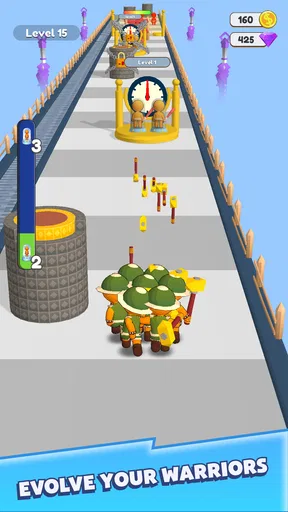
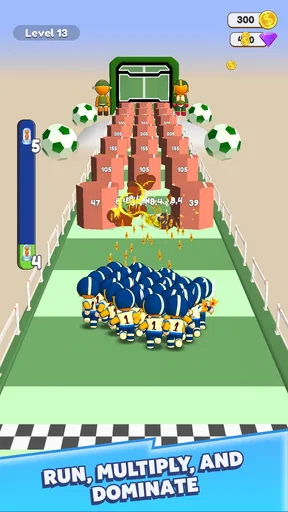
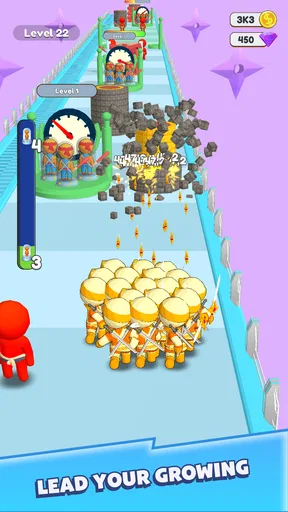
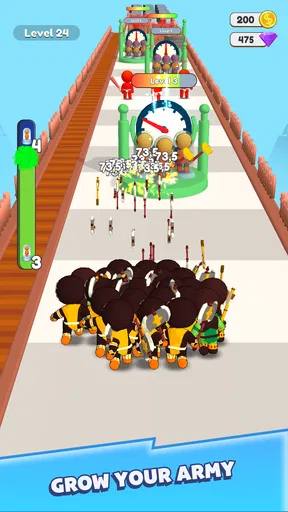
 Analysis by AppCompare
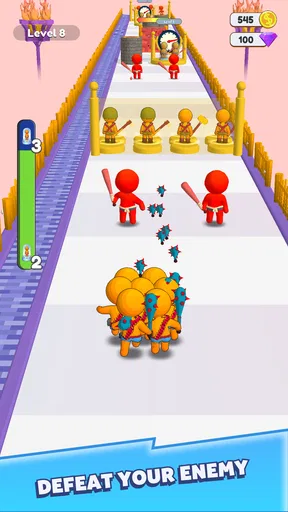
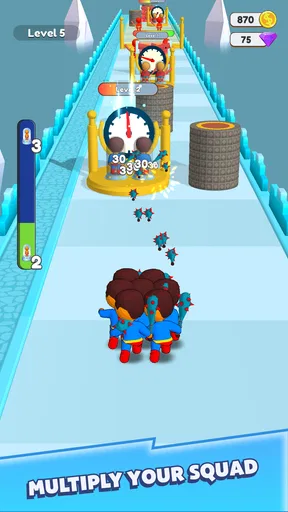
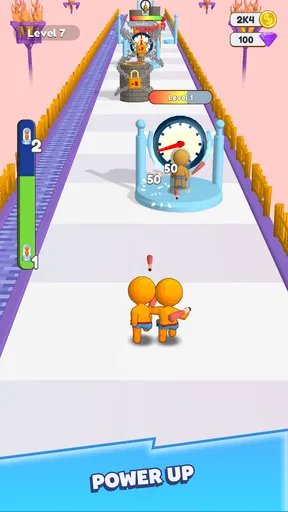
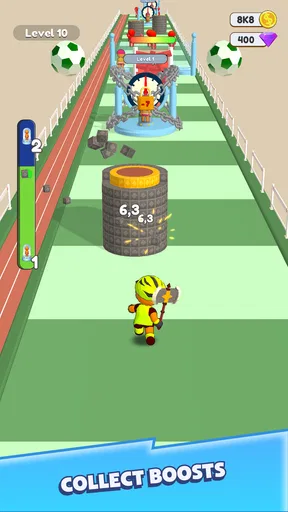
I enjoy racing games most when their rules are clear and a round asks me to make a few meaningful choices rather than memorize a long list of controls. Crowd Clash: Run Master looks built around that quick, readable appeal: it is a racing game about moving through a run, growing a crowd, and trying to finish with enough strength to overcome the opposing group. That premise gives each run a simple goal, but it also makes route choices and timing matter more than they might in a conventional car racer.
My impression is that this is best approached as a casual, pick-up-and-play game, not as a simulation or a deep competitive racer. Its audience is broad: the age rating is Everyone, and the game is free to install. Universe Game Labs is the developer. It has a 4.4 average from around 6,300 ratings, with over 500,000 installs, which suggests that plenty of players have at least tried it. Those figures are useful context, not a promise that every player will enjoy its particular mix of running and crowd-building.
A sensible way to try it
For a first session, I would focus on whether I enjoy the decisions during a run, rather than judging the game by a win or loss. A good test is to play a handful of attempts without spending and ask whether I can explain why one route left me better prepared than another. That separates the appeal of the core idea from any later interest in progression or optional purchases.
This also makes the game easier to recommend selectively. It suits someone who likes a readable objective and can enjoy repeating a compact challenge, even when the reward is simply seeing a different outcome. If you need a strong narrative reason to continue, a detailed driving model, or a long-term competitive ladder, I would set expectations much lower and consider another racing game first.
Where the run becomes a decision
I find the most useful way to judge a run is to notice which decisions I can actually control and which outcomes I’m simply reacting to. That keeps a quick win from being mistaken for proof of deep strategy, and a loss from feeling like a reason to spend. With that distinction in mind, I’d look next at how the game’s purchase options affect the decision to keep playing.
Counting is the hook, not just the finish
The central appeal is easy to understand from the game’s premise: run, build up a group, and use that advantage against an enemy crowd. That makes the race feel less like a test of pure speed and more like a series of choices about how to arrive at the finish. If you like games where a small decision can visibly change the final encounter, that framing is more interesting than simply steering toward a line.
The trade-off is that the concept depends on the run itself offering enough variety to stay engaging. A crowd-counting race can be satisfying when I can see why one choice leaves me in a stronger position than another. It can feel repetitive if the same pattern of gathering members and confronting an opposing group keeps resolving in much the same way. I would judge its staying power by whether I enjoy replaying those short decisions, rather than expecting a story or a realistic motorsport challenge.
Worth Reading Before You Choose

Flipboard Shows What News Apps Must Do Beyond the Feed

Switching to Android Auto Means Rethinking Your Driving Routine

Google Calendar Makes a Crowded Week Easier to Manage

Ludo King Makes the Most of the Minutes Between Plans

Baby Panda World Brings Quick Play to Modern Phones, but Its Game Library Feels Busy

ESPN’s Live Game View Makes Following Close Games Easier
One useful way to play is to treat the crowd as a resource to protect, not merely a number to increase. When a route presents a choice, I would consider the likely cost as well as the possible gain: a bigger group is only helpful if enough of it reaches the confrontation. That mindset makes the simple premise more thoughtful, even without turning every run into a complicated strategy exercise.
Who will enjoy the pace
I can see this working well for someone who wants a lightweight racing game during a short break, or for a younger player drawn to clear goals and crowd-versus-crowd action. It is also a reasonable option for people who find traditional racing controls fussy and would rather focus on route decisions than on realistic acceleration, braking, or vehicle setup. The appeal is in quick comprehension: understand the run, build an advantage, and see how it holds up.
It is less suitable if you want careful track simulation, licensed cars, long championship progression, or a competitive racer where mastery comes from fine control over a vehicle. Those are different pleasures, and this game’s crowd-focused premise points elsewhere. If you prefer precision driving or want a substantial single-player campaign, I would look at a more conventional racing title instead of expecting this one to become that kind of experience.
A realistic everyday use is a few rounds while waiting for a ride or taking a break between tasks. In that situation, the straightforward objective is a strength: I can decide whether I want another attempt without first remembering a complicated setup. The same quick structure can be a weakness during a long session, though. If I am looking for a game that rewards an hour of focused play with layered systems, the basic run-and-crowd loop may not provide enough variety on its own.
Progress without assuming too much
The available version is 1.2.6, and the game is free to start. That makes it easy to try the core idea before deciding whether it belongs on your phone. In-app purchases are available, priced from $0.99 to $99.99 per item. That is the purchase context worth keeping in mind: optional spending exists across a wide range, but the existence of those offers alone does not establish what each one contains or whether it changes a race.
For a fair first session, I would play without buying anything and notice whether the basic run is enjoyable by itself. That gives you a clean answer to the most important question: do you like making the crowd-building decisions? If you do, you can then consider whether any purchase is genuinely useful to your own play. If the core loop does not click, spending is unlikely to fix that mismatch.
There is also a practical distinction between progress that comes from learning and progress that comes from paying. A player can improve at reading the run and making choices even when the game offers purchases; those are separate things. I would avoid treating a large purchase option as evidence that it is necessary, and I would check the item details in the game before confirming anything. That is especially sensible when trying a free game with younger players, since the Everyone rating describes the content audience, not a spending limit.
How it fits a quick-play routine
Its short-session premise makes it easy to fit between ordinary tasks, but I would still choose the moment carefully. A run that ends in a crowd clash is a poor match for a situation where you may need to stop instantly in the middle of a decision. When I have only a minute, I would start only if I am comfortable leaving a round unfinished or pausing my attention until it is done; when I have a little breathing room, the repeated attempts make more sense.
For families, the broad age rating can make the game an approachable option to consider, but I would separate age suitability from purchase supervision. A child who is interested in the crowd-building idea may understand the objective quickly, while an adult should still decide whether purchases are allowed and how approval works on the device. That simple boundary is more useful than assuming a free install means the experience has no spending decisions.
Fairness, friction, and the buying decision
I’d separate the question of whether the basic crowd-building loop is enjoyable from whether any paid item seems worthwhile; those are not the same decision. Since the listed purchase range alone doesn’t explain what an item changes, I’d inspect its description and consider whether it supports the way I like to play before buying. That leaves one final question: how much confidence should I place in the experience overall?
What can be said about spending
The game is free, but the in-app purchase range extends from $0.99 to $99.99 per item. That is a broad spread, so I would approach the shop deliberately rather than tapping through it casually. The purchase facts do not, by themselves, show whether an item is cosmetic, speeds up progress, or affects the strength of a crowd. I would not claim the game is pay-to-win or completely free of competitive influence without knowing what the individual offers do.
For players who care about fairness, the sensible test is to compare your experience before and after any purchase, and to notice whether you can enjoy runs without buying an advantage. If you are playing alongside friends or family, agree on a no-purchase rule until everyone understands the offers. It avoids turning a quick racing game into an unexpected spending conversation, and it keeps the focus on whether the game is fun on its own terms.
My advice is to set a device-level spending safeguard if a child will be using the game, and to require approval for purchases. This is not a claim about a particular payment or parental-control system inside the game; it is a practical precaution whenever an app offers paid items. The low entry barrier of a free download should not be confused with a guarantee that every optional purchase is small.
What I would check before committing
Because the purchase range is so wide, I would inspect each offer’s description and confirmation screen before buying. I would also ask whether the item changes the part I enjoy. If my favorite part is choosing how to build a crowd, an offer that bypasses that process might make the game less satisfying rather than more. If I am only curious about the premise, there is no reason to spend before I know whether I want to keep playing.
The game’s 89 written reviews are a smaller pool than its ratings count, so I would read recent player comments with care rather than assume one short opinion represents the whole experience. I would look for specific accounts of how the runs feel over time and whether purchases matter to the writer’s enjoyment. General praise or frustration is less useful than a concrete explanation of what happened during play.
For device compatibility, the listed minimum operating-system requirement is 7.1. That helps answer a basic installation question, but it does not tell me how the game will perform on every device. If your phone is older or storage is tight, it is worth checking the install screen and trying a short session before deciding to keep it. The game is recent, released on December 3, 2025, so players who value long-established community advice may find fewer useful long-term impressions than they would for an older racer.
Keeping expectations grounded
One question I would ask before installing is whether this is a driving game in the usual sense. I would answer no: its racing identity comes from moving through a run and building a group for the final confrontation, rather than from controlling a car around a track. That distinction matters because someone searching for vehicle handling may mistake the category for the kind of racing they want.
Another practical question is whether a free start means every useful part is free. The purchase range confirms that optional paid items exist, but it does not establish which items are essential or how they affect progress. I would try the available play first, inspect an offer only if I have a specific reason to consider it, and avoid buying simply because a prompt appears. If fairness is central to your choice, that uncertainty is a legitimate reason to wait for clearer firsthand accounts from players.
Choosing it over another racer
Compared with the usual car-racing alternative, this game’s identity is not vehicle handling; it is the changing size of the group you bring toward the finish. That makes it a better fit for someone who wants quick decisions and a playful race premise than for someone who wants to tune a car or learn a demanding track. Compared with other casual runners, the crowd-versus-crowd payoff gives the finish a clear point: the run is building toward a confrontation, not just a distance record.
That difference is also a useful filter. If you enjoy watching a small advantage accumulate and then seeing whether it survives the final challenge, the concept should be easy to test. If you find counting mechanics monotonous, or if you want the satisfaction of improving lap times through precise driving, another genre will suit you better. The game’s simple premise is its strongest point and its main limitation: it tells you what kind of fun it is offering, but it does not automatically provide depth for every kind of racer.
My trust verdict
I would recommend Crowd Clash: Run Master as a low-commitment try for players curious about casual racing built around growing a crowd and taking that group into a final clash. The free download makes sampling the idea straightforward, while the Everyone rating makes its intended audience broad. Its 4.4 average and 500K-plus installs show that it has attracted a substantial audience, though neither figure can settle whether its particular loop will hold your attention.
My recommendation comes with a clear boundary: try the game for its run decisions, not because you expect a realistic racer or a guaranteed deep progression system. Keep purchases optional until you have examined what they offer, especially if a child may play. I would install it for short sessions, decide based on the basic loop, and move on if the crowd-counting choices start to feel repetitive. For the right player, that focused premise is a tidy bit of casual racing; for someone seeking precision driving or proven purchase fairness, a different game is the safer match.
Pros
- Quick-to-learn controls make it easy to start playing.
- Short levels suit quick gaming sessions.
- Collecting followers gives each run a clear objective.
- Obstacle-filled courses keep runs varied.
- Bright visuals make the action easy to follow.
Cons
- Gameplay can feel repetitive after many runs.
- Ads may interrupt the experience
- depending on the version.
- Precise movement can be tricky on small screens.
- Later stages may feel harder without upgrades.
- The game requires an internet connection for some features.
FAQs for Crowd Clash: Run Master
What is Crowd Clash: Run Master?
Crowd Clash: Run Master is a casual arcade runner built around collecting a crowd as you move through obstacle-filled levels. You guide a group along a track, steer around hazards, and try to gather more characters before reaching the finish. The larger your crowd, the better your chances of overcoming the final challenge. Its straightforward controls make it easy to start, while choosing a safe route and avoiding losses gives each run a simple strategic element.
How do you play Crowd Clash: Run Master?
Gameplay is designed to be quick to learn: swipe or otherwise steer your crowd along the course, pass through gates that increase your numbers, and avoid obstacles or routes that reduce them. At the end of a level, your remaining group faces a final encounter that rewards collecting as many members as possible. The exact controls and level features can vary between versions, so check the current store listing and in-game tutorial for details on your device.
Is Crowd Clash: Run Master free to download, and does it include ads or in-app purchases?
The game may be offered as a free download, but availability, pricing, advertisements, and optional purchases can differ by platform, region, and version. Free-to-play games commonly use ads between or during levels and may offer purchases for bonuses or other content; these details should be confirmed on the Google Play or Apple App Store listing before installing. If you prefer to avoid unexpected charges, review the purchase settings on your device and require authentication for transactions.
Can I play Crowd Clash: Run Master offline?
Some runner games allow their core levels to be played without an internet connection, but features such as advertisements, rewards, event content, or progress synchronization may require connectivity. Offline support can also change with updates, so it is best not to assume every feature will work without internet access. Check the app’s current store description and test the game in airplane mode if offline play is important to you. Keep in mind that reinstalling while offline may affect saved progress.
Is Crowd Clash: Run Master suitable for children, and what should parents check?
Its simple running and crowd-collecting gameplay may appeal to younger players, but suitability depends on the current version’s content and monetization. Parents should review the age rating, privacy information, and permissions shown in the app-store listing, as well as check whether the game contains advertising, optional purchases, or links to external content. For younger children, parental controls can help restrict purchases and screen time. Store ratings and features may differ between regions and updates.


